


Protomorphogens (PMG™ Extracts): The Complete Guide
Everything you need to know about Standard Process Protomorphogen™ (PMG™) extracts: what they are, how they're made, the science behind them and how to choose the right formula.
- Definition
- Protomorphogen (pro-toe-MOR-fo-jen) · abbreviated PMG™
- A protomorphogen is a concentrated extract of the nuclear material of a specific animal organ or gland, developed by Dr. Royal Lee of Standard Process. Each PMG™ extract supplies a unique profile of nucleotides, peptides and minerals from one tissue, such as heart, liver, adrenal or thyroid, to support that same tissue in the body.*
What is a protomorphogen?
A protomorphogen (PMG™) is a concentrated extract made from the nuclear material of a specific animal organ or gland. The term was coined by Dr. Royal Lee, the dentist, inventor and nutrition pioneer who founded Standard Process in 1929. Each Standard Process PMG™ extract comes from one tissue, such as heart, liver, kidney, adrenal or thyroid, and provides a unique profile of nucleotides, peptides and minerals from that tissue.*
The idea behind protomorphogens is "like supports like": an extract of a particular organ is used to give nutritional support to the matching organ in the body. That is why each PMG™ formula is named after its tissue source, for example Cardiotrophin PMG® (heart), Hepatrophin PMG® (liver) and Drenatrophin PMG® (adrenal).*
Protomorphogen extracts are available only from Standard Process, which makes them with its own proprietary process.
Dr. Royal Lee and the history of protomorphogens
Dr. Royal Lee believed that food should be eaten as close to its natural state as possible and that animal organs, long valued in traditional diets, offer nutrition that muscle meat and plants do not. In 1947 he and William A. Hanson published Protomorphology: The Principles of Cell Auto-Regulation, the book that laid out his protomorphogen theory.
Standard Process began offering organ-specific PMG™ extracts in the early 1950s. Hepatrophin PMG®, for example, was introduced in 1952, and Symplex® F followed in 1965. More than 70 years later, the PMG™ line remains one of the most distinctive parts of the Standard Process catalog and is used by chiropractors, nutritionists, naturopaths and other practitioners around the world.
How PMG™ extracts are made
Standard Process uses a proprietary, low-heat process to separate the material in organ cells into two kinds of ingredients:
- Protomorphogen™ (PMG™) extracts, made from the nuclear portion of the cells. These carry the nucleotides, peptides and minerals that give each tissue its identity.
- Cytosol™ extracts, made from the fluid portion of the cells (the cytoplasm). You will see these listed as, for example, "bovine adrenal Cytosol™ extract" in many Standard Process formulas.
Most PMG™ formulas are small tablets that pair one tissue extract with a mineral carrier, such as magnesium citrate or calcium lactate. Combination formulas like Symplex® F and Symplex® M blend several PMG™ extracts that work together as a system.
What's inside a protomorphogen? Nucleotides, peptides and microRNA
Standard Process describes every PMG™ extract as containing "a unique profile of nucleotides and peptides" from its source tissue. Nucleotides are the building blocks of DNA and RNA; peptides are short chains of amino acids.
Modern research has added another layer. In 2015, Standard Process researchers published a paper in the journal PLOS ONE, "Survival and Diversity of Human Homologous Dietary MicroRNAs in Conventionally Cooked Top Sirloin and Dried Bovine Tissue Extracts." It showed that edible bovine tissues, including dried tissue extracts like those used in supplements, contain unique profiles of microRNAs (miRNAs) that survive heat processing. MicroRNAs are tiny RNA molecules that help regulate which genes are switched on or off in a cell, a field known as epigenetics. Research on how dietary microRNAs act in the body is still developing.*
How practitioners use protomorphogens
Practitioners usually choose a PMG™ extract to match the organ or gland they want to support, and often pair it with a whole-food formula for the same system. Common examples:
- Stress and energy: Drenatrophin PMG® (adrenal) with Drenamin® or Adrenal Desiccated*
- Liver and detox: Hepatrophin PMG® (liver) with Livaplex® or Milk Thistle Forte*
- Immune support: Thymus PMG® and Spleen PMG® with Immuplex® or Thymex®*
- Hormone balance: Symplex® F for women or Symplex® M for men, sometimes with Ovatrophin P PMG™ or Orchic PMG®*
- Cardiovascular: Cardiotrophin PMG® (heart) with Cardio-Plus®*
Because PMG™ extracts are so targeted, many practitioners use a testing method, such as the Nutrition Response Testing we use at NHIC, to decide which organ systems to support and in what order.
The complete list of Standard Process PMG™ extracts
These are the protomorphogen formulas we carry. Click any name to read its full guide.
| Formula | Tissue source | Body system focus |
|---|---|---|
| Cardiotrophin PMG® | Bovine heart | Heart & cardiovascular system* |
| Dermatrophin PMG® | Bovine epithelium | Skin* |
| Drenatrophin PMG® | Bovine adrenal | Adrenal glands & stress response* |
| Hepatrophin PMG® | Bovine liver | Liver & detoxification* |
| Hypothalamus PMG® | Porcine hypothalamus | Hypothalamus & endocrine signaling* |
| Mammary PMG® | Bovine mammary | Breast tissue* |
| Neurotrophin PMG® | Porcine brain | Brain & nervous system* |
| Oculotrophin PMG® | Porcine eye | Eyes* |
| Orchic PMG® | Bovine testis | Male reproductive system* |
| Ostrophin PMG® | Bovine bone | Bones & skeletal system* |
| Ovatrophin P PMG® | Porcine ovary | Female reproductive system* |
| Parotid PMG® | Bovine parotid gland | Parotid (salivary) gland* |
| Pituitrophin PMG® | Bovine pituitary | Pituitary & endocrine system* |
| Pneumotrophin PMG® | Bovine lung | Lungs & respiratory system* |
| Prostate PMG® | Bovine prostate | Prostate* |
| Renatrophin PMG® | Bovine kidney | Kidneys & urinary system* |
| Spleen PMG® | Bovine spleen | Spleen, blood & immune system* |
| Symplex F® | Bovine ovary, adrenal, pituitary & thyroid | Female hormone (HPG) axis* |
| Symplex M® | Bovine testis, adrenal, pituitary & thyroid | Male hormone (HPG) axis* |
| Thymus PMG® | Bovine thymus | Thymus & immune system* |
| Utrophin PMG® | Bovine uterus | Uterus & female reproductive system* |
Standard Process also makes Myotrophin PMG®, Pancreatrophin PMG® and Thytrophin PMG®, plus combination formulas that include PMG™ extracts, such as Biost® and Paraplex®.
PMG™ vs. Cytosol™ vs. whole-food glandulars
| PMG™ extract | Cytosol™ extract | Desiccated / whole-food glandular | |
|---|---|---|---|
| Part of the cell | Nuclear material | Cytoplasm (cell fluid) | Whole tissue |
| Key contents | Nucleotides, peptides, minerals, microRNAs | Enzymes, proteins and other cytoplasmic factors | Full spectrum of the tissue's nutrients |
| Example | Drenatrophin PMG® (adrenal) | Bovine adrenal Cytosol™ extract in Drenamin® | Adrenal Desiccated |
| Typical role | Targeted, tissue-specific support* | Supports cell function within a formula* | Broad nutritional support for the organ* |
How to take PMG™ extracts
- Most single PMG™ formulas: one tablet, three times per day on an empty stomach, or as directed by your practitioner.
- Symplex® F and Symplex® M: one tablet per meal, or as directed.
- Hypothalamus PMG®: one tablet per day, or as directed.
- Start low: many practitioners begin with one tablet a day and build up over one to two weeks, especially when using several PMG™ extracts at once.
- Give it time: whole-food and PMG™ support work gradually; most programs run for several weeks to a few months before reassessing.
Some people notice temporary changes, such as mild fatigue or a runny nose, when they first start. If that happens, reduce the amount and talk with your practitioner. PMG™ extracts are made from bovine or porcine tissues, so they are not suitable for vegetarians or anyone avoiding those sources.
Quality: from the Standard Process farm and lab
Standard Process has made whole-food supplements in Palmyra, Wisconsin, since 1929. It grows many of its plant ingredients on its own certified organic farm, processes nutrients with low heat to preserve them, follows FDA current Good Manufacturing Practices for dietary supplements (21 CFR Part 111), and can trace each bottle back to its batch and ingredients.
How we use protomorphogens at NHIC
At the Natural Health Improvement Center in Meridian, Idaho, PMG™ extracts are a core part of the individualized programs we design with Nutrition Response Testing. We use them to give targeted support to the organs and glands that need it most, alongside whole-food nutrition and diet changes. If you are not sure where to start, book a consultation and we'll help you build a plan.
Protomorphogen FAQ
What is a protomorphogen?
A protomorphogen (PMG™) is a concentrated extract of the nuclear material of a specific animal organ or gland, developed by Dr. Royal Lee of Standard Process. Each PMG™ extract provides a unique profile of nucleotides, peptides and minerals from one tissue, such as heart, liver or adrenal, to support the matching tissue in the body.*
What does PMG stand for?
PMG is short for protomorphogen. Standard Process uses "PMG™ extract" on ingredient labels (for example, "bovine liver PMG™ extract") and "PMG" in product names such as Hepatrophin PMG®.
Who invented protomorphogens?
Dr. Royal Lee, founder of Standard Process, developed the protomorphogen concept. He and William A. Hanson described it in the 1947 book Protomorphology: The Principles of Cell Auto-Regulation, and Standard Process began offering PMG™ extracts in the early 1950s.
What is the difference between a PMG™ extract and a Cytosol™ extract?
Standard Process separates organ cells into two ingredients: PMG™ extracts come from the nuclear portion of the cell, and Cytosol™ extracts come from the cytoplasm (the fluid portion). Both are used in Standard Process formulas, but only PMG™ extracts carry the "PMG" name.
Are protomorphogens the same as glandulars?
They are related but not the same. Desiccated glandulars are whole dried organ tissue. PMG™ extracts are a specific, concentrated fraction of that tissue made with Standard Process's proprietary process, so they are more targeted.*
How do you take PMG™ extracts?
Most single PMG™ formulas are taken as one tablet three times per day on an empty stomach, or as directed. Symplex® F and Symplex® M are one tablet per meal, and Hypothalamus PMG® is one tablet per day. Many practitioners start with a lower amount and build up over one to two weeks.
Can I take more than one PMG™ extract at a time?
Yes. Practitioners often combine several PMG™ extracts, or pair a PMG™ with a whole-food formula for the same body system. Because each person's needs differ, it is best to work with a practitioner on which combinations to use.
Are there side effects?
PMG™ extracts are generally well tolerated. Some people notice temporary changes, such as mild fatigue or a runny nose, when they first start. Reducing the amount and building up slowly usually helps; talk with your practitioner if anything concerns you.
Do PMG™ extracts contain hormones?
PMG™ extracts are nutritional supplements, not hormone products. Where Standard Process includes thyroid PMG™ extract, as in Symplex® F and Symplex® M, it is processed to substantially remove thyroxine.
Are protomorphogens vegetarian?
No. PMG™ extracts are made from bovine (cow) or porcine (pig) tissues, so they are not suitable for vegetarians, vegans or anyone avoiding those sources.
Where can I buy Standard Process PMG™ extracts?
You can order more than 20 Standard Process PMG™ formulas, including Symplex® F and Symplex® M, from the Natural Health Improvement Center at nhicenter.com. Orders over $75 ship free.
Explore every Standard Process PMG™ extract
Each guide covers the tissue source, what it's used for, how to take it, ingredients and FAQs.

Cardiotrophin PMG
Bovine heart

Dermatrophin PMG
Bovine epithelium

Drenatrophin PMG
Bovine adrenal
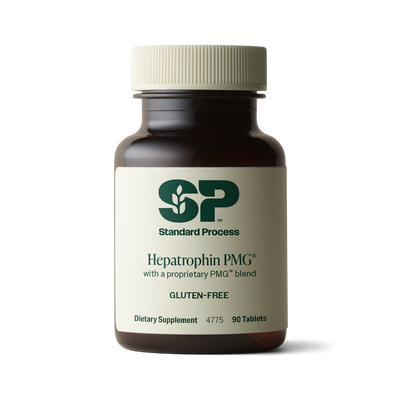
Hepatrophin PMG
Bovine liver

Hypothalamus PMG
Porcine hypothalamus

Mammary PMG
Bovine mammary

Neurotrophin PMG
Porcine brain

Oculotrophin PMG
Porcine eye
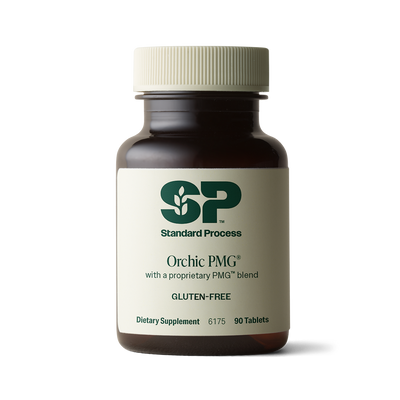
Orchic PMG
Bovine testis

Ostrophin PMG
Bovine bone

Ovatrophin P PMG
Porcine ovary

Parotid PMG
Bovine parotid gland
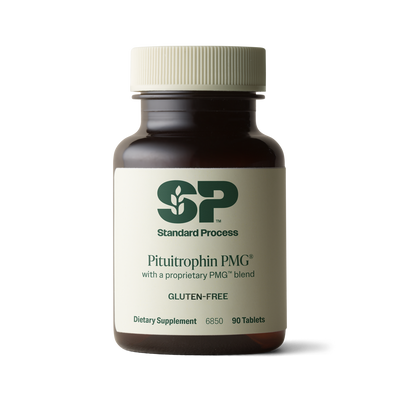
Pituitrophin PMG
Bovine pituitary

Pneumotrophin PMG
Bovine lung
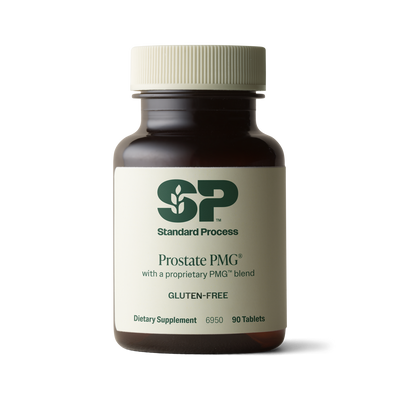
Prostate PMG
Bovine prostate

Renatrophin PMG
Bovine kidney

Spleen PMG
Bovine spleen

Symplex F
Bovine ovary, adrenal, pituitary & thyroid

Symplex M
Bovine testis, adrenal, pituitary & thyroid
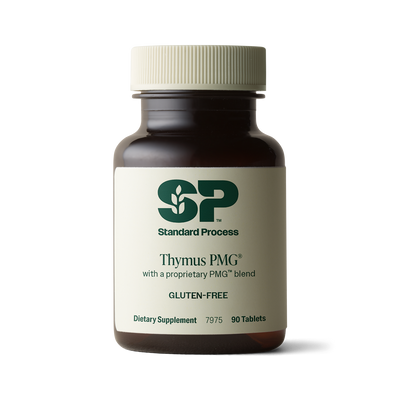
Thymus PMG
Bovine thymus

Utrophin PMG
Bovine uterus
Find the right protomorphogen for you
PMG™ extracts work best as part of a personalized plan. Book a Nutrition Response Testing consultation and we'll show you which organ systems need support.
*These statements have not been evaluated by the Food and Drug Administration. These products are not intended to diagnose, treat, cure, or prevent any disease. This page is educational and is not medical advice; consult your healthcare practitioner before starting any supplement. NHIC is an independent retailer and is not affiliated with or sponsored by Standard Process Inc. Protomorphogen™, PMG™ and Cytosol™ are trademarks of Standard Process Inc.